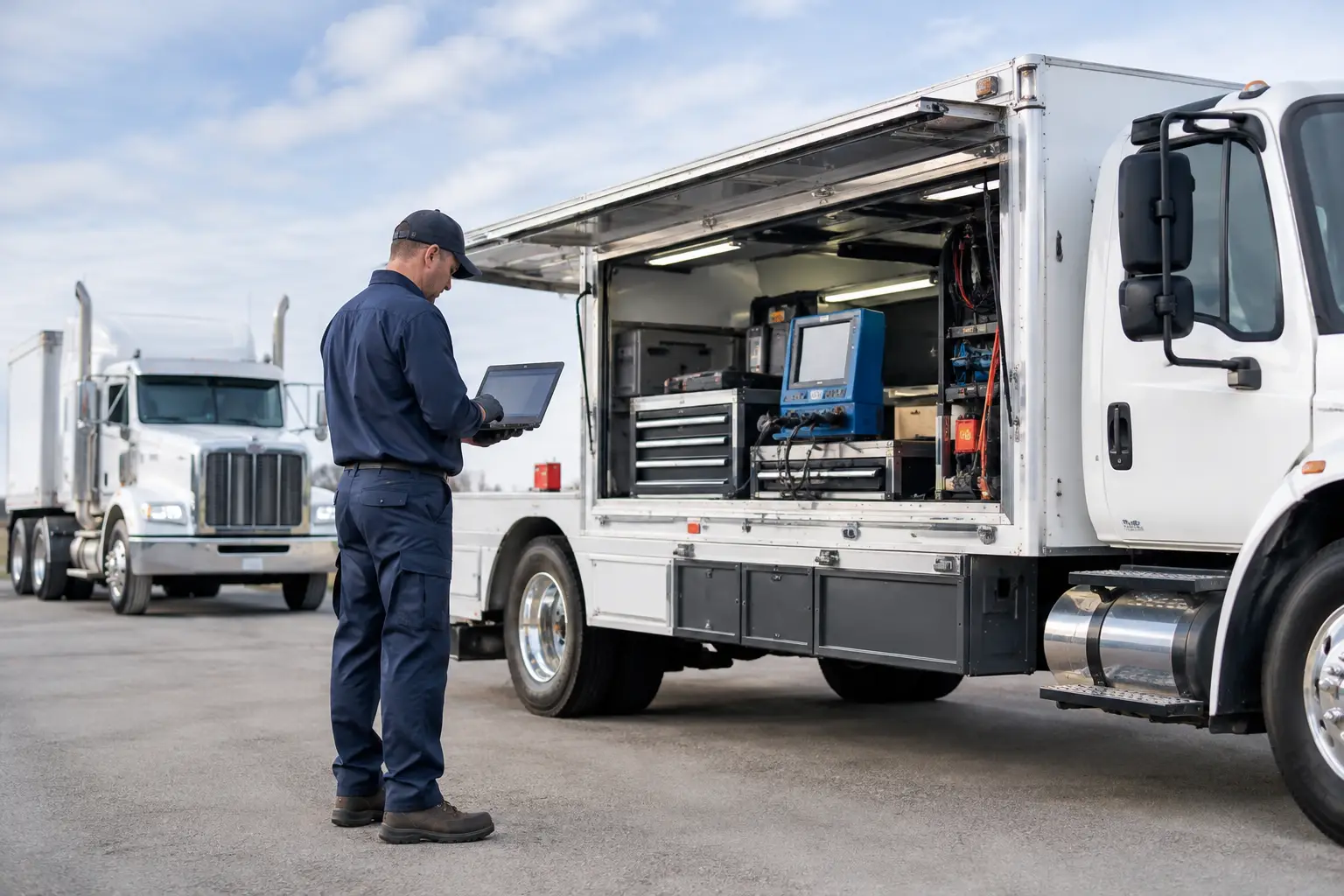
A parked truck with a DPF warning light is not just an emissions problem. It can become a missed appointment, a rejected load, a forced derate, or an expensive tow before the day is over. Mobile DPF diagnostic service trucks bring the testing equipment and heavy-duty repair capability to the truck, so drivers and dispatchers can get a clear answer without losing more time moving disabled equipment to a shop.
For commercial equipment operating through Spartanburg and the surrounding freight corridors, fast diagnostics matter. A DPF-related fault may look simple on the dash, but the root cause can involve soot loading, an interrupted regeneration, sensor failure, exhaust leaks, wiring damage, fuel-system concerns, or an engine condition that keeps the filter from cleaning correctly. The repair starts with finding the real cause, not clearing a code and hoping the truck stays running.
What Mobile DPF Diagnostic Service Trucks Do
A mobile DPF service call begins with a technician reading the truck’s active and stored fault codes, checking engine and aftertreatment data, and confirming what the ECM is seeing. That includes soot load, differential pressure, exhaust gas temperatures, DEF system operation where applicable, regeneration status, and sensor readings. These numbers help separate a filter that needs a properly completed regeneration from a truck with a failed component or an underlying engine issue.
The goal is practical: determine whether the vehicle can be returned to service at the location, needs a repair before regeneration, or requires a controlled next step such as filter cleaning or shop-level work. A forced regeneration may be appropriate for some faults, but it is not a universal solution. Running a regen with a damaged temperature sensor, restricted exhaust path, fuel dosing problem, or active engine fault can waste time and may create more problems.
Mobile diagnostics also save the driver from guessing. Repeatedly attempting a parked regen after it has failed, continuing to drive a truck in derate, or ignoring a flashing warning can turn a manageable service call into a no-start condition or a roadside shutdown.
Why DPF Problems Need More Than a Code Clear
The diesel particulate filter captures soot created during normal diesel combustion. The truck periodically burns that soot through an active or passive regeneration process. When the system cannot complete that process, soot accumulation rises and the ECM may limit power, restrict speed, or eventually prevent the truck from operating.
A code clear does not remove soot from the filter or repair the reason regeneration failed. It may temporarily turn off a warning light, but the ECM will recognize the unresolved condition again. For an owner-operator or fleet manager, that means the same truck may be back on the shoulder a few miles later, often with less power and fewer repair options.
Proper mobile DPF diagnostics look beyond the filter itself. A technician may find an exhaust leak before the filter, a loose or corroded connector, damaged wiring near the exhaust system, an implausible pressure sensor reading, or a temperature sensor that is preventing the ECM from approving regeneration. On other trucks, the aftertreatment system is responding to an engine-side problem such as excessive soot production, injector concerns, turbocharger issues, or an air-handling fault.
That distinction matters because replacing or cleaning a filter without correcting the source of the restriction can lead to another failure. The right repair is the repair that keeps the equipment working after it leaves the roadside.
Common Signs You Need Mobile DPF Service
A DPF fault does not always begin with a full derate. Drivers may first notice a regeneration request that will not complete, rising exhaust temperatures, reduced fuel economy, sluggish acceleration, or an engine light paired with aftertreatment messages. Some trucks display warnings for high soot load, differential pressure, low DEF quality, NOx sensor faults, or exhaust temperature sensor performance.
Do not wait for a severe derate if the truck is showing repeated regeneration warnings or active emissions faults. Early testing can often identify a sensor, wiring, or exhaust issue before the truck loses the ability to complete its route. Dispatch should also treat recurring DPF events on the same unit as a maintenance issue, not a one-time inconvenience. Repeated events create a useful pattern that can point to a component failure or operating condition.
What a Roadside DPF Diagnostic Visit Looks Like
On a mobile service call, the technician first verifies the complaint and checks the truck’s operating condition. If the truck is in a dangerous location, safety and traffic exposure come first. Once the work area is secure, diagnostic equipment is connected and the aftertreatment system is evaluated using live data rather than fault codes alone.
The inspection may include checking harness routing and connectors, looking for exhaust leaks or damaged clamps, examining sensor connections, and verifying the condition of related electrical circuits. If the diagnosis supports it and conditions are safe, a technician may perform or support a regeneration procedure. This work must be done with proper clearance, monitoring, and attention to high exhaust temperatures. A parked regen is not something to run beside dry grass, near combustible materials, or in an unsafe parking area.
Some repairs can be completed on location, including certain sensor, wiring, connector, exhaust, or electrical repairs. Other failures require a replacement part, off-truck DPF cleaning, or more extensive engine and emissions work. A professional mobile technician should explain that plainly, so the driver or fleet can decide whether to arrange the next repair step instead of spending hours on an unsuccessful roadside attempt.
When Mobile Repair Is the Right Call
Mobile DPF diagnostics are especially valuable when the truck is parked at a receiver, truck stop, yard, roadside location, or customer facility and cannot reasonably travel to a shop. The service reduces the delay of arranging a tow, waiting for shop intake, and moving a loaded tractor or trailer through a breakdown situation.
It also works well for fleets that need a fast assessment before making a dispatch decision. If a unit is showing an emissions fault but can still move safely, the fleet needs to know whether it can finish a nearby delivery, needs immediate repair, or should be taken out of service before a more serious derate occurs.
There are limits. A truck with a severely restricted filter, major engine fault, damaged aftertreatment assembly, or component requiring specialized cleaning may need shop work. Mobile service still provides value in that situation because it confirms the condition, helps avoid unnecessary parts replacement, and can prevent an unplanned failure during transit.
Protecting Uptime Between Service Calls
DPF problems are not always preventable, but basic operating habits reduce avoidable failures. Drivers should allow regeneration cycles to complete when conditions permit and report warning messages early. Fleets should investigate repeated fault codes, monitor units that idle excessively, and keep scheduled engine and aftertreatment maintenance from slipping behind.
Electrical inspections matter as well. Heat, road spray, vibration, and debris are hard on harnesses and sensor connectors around the exhaust system. A small wiring problem can send bad information to the ECM and create an aftertreatment fault that appears much larger than the original issue.
For time-sensitive loads, keep the truck’s fault details available when calling for help: make and model, engine, active dash messages, fault codes if available, whether a regen was attempted, and the exact location. That information helps a mobile technician arrive prepared and keeps diagnosis moving.
Eugen Solution Semi Truck & Trailer Repair provides 24/7 mobile heavy-duty diagnostics and roadside assistance for trucks facing DPF, electrical, engine, brake, tire, and trailer problems around Spartanburg. When an emissions warning threatens your route, getting an accurate diagnosis at the truck is often the fastest way to protect the load, the schedule, and the equipment. Call for service before a warning light becomes a tow bill.
Leave a Reply